

Infinipix and WME: how video processing for a video wall works
Author: Infra Technologies / Barco · Published:
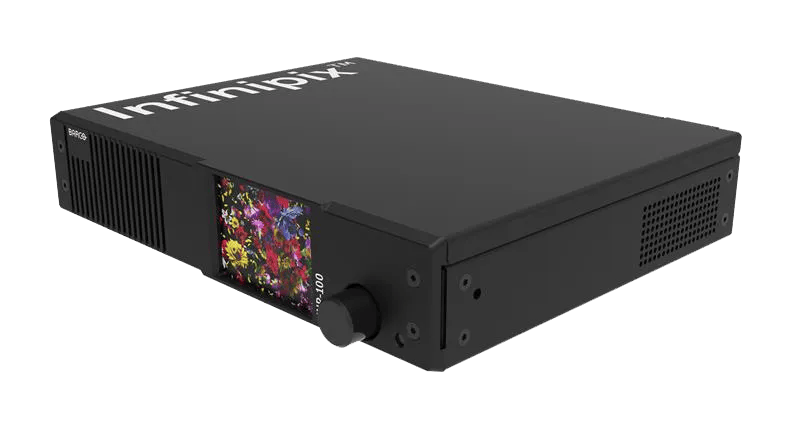
This material is based on official information from Barco.
A video wall cannot display anything on its own. It needs a controller that captures signals from sources, arranges them across the matrix of modules, and outputs the final image to the displays. Barco covers this task with two product families: Infinipix and WME. The difference between them matters at the design stage, not only when purchasing.
What a video wall controller does
A controller performs three related functions. First, input capture: from computers, cameras, video-surveillance systems, streaming video and any other sources, each with its own resolution and format. Second, layout and scaling: any source can be placed on an arbitrary area of the wall, stretched across several modules, shrunk into a window, or overlaid on top of another. Third, output to the matrix: the image is cut along the boundaries of the physical modules and delivered in sync to the LCD panels or LED cabinets, so seams don't create visible breaks in the picture.
Infinipix versus WME
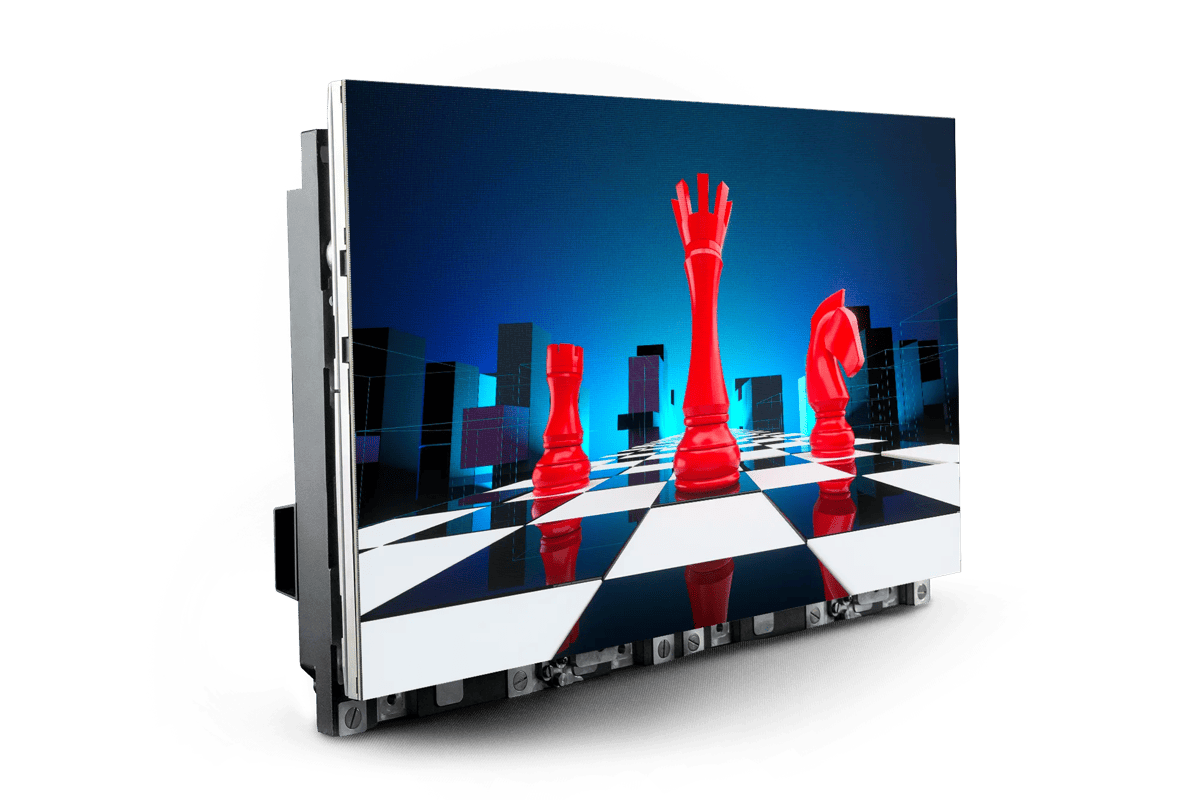
The Infinipix lineup, including the INP-100 and IND-100 models, targets large video walls with demanding reliability requirements: a high number of inputs and outputs, flexible window layouts, and performance headroom for walls with high combined resolution. WME and its WME-110 and WME-050 variants solve the same task for simpler configurations, where the full set of inputs isn't needed or compactness and a lower price matter more.
In practice the choice depends on the number of sources, the wall's combined resolution, and redundancy requirements, not on the brand name. A small meeting room or control desk with a limited number of sources is well served by WME. A situation room with dozens of sources, signal duplication, and room to grow calls for Infinipix.
When you actually need a controller, not just displays
- If several sources need to appear on the wall at once in separate windows, a controller is unavoidable.
- If sources need to swap places, expand to full screen, or recall standard layouts, that's a controller function, not something the panels do on their own.
- If the wall is critical to continuous operation, redundancy at the controller level matters as much as redundancy in display power.
At Infra Technologies we size the controller model to the customer's real number of sources and usage scenario, not to the nominal size of the video wall, because those are the parameters that actually determine what the controller needs to be.